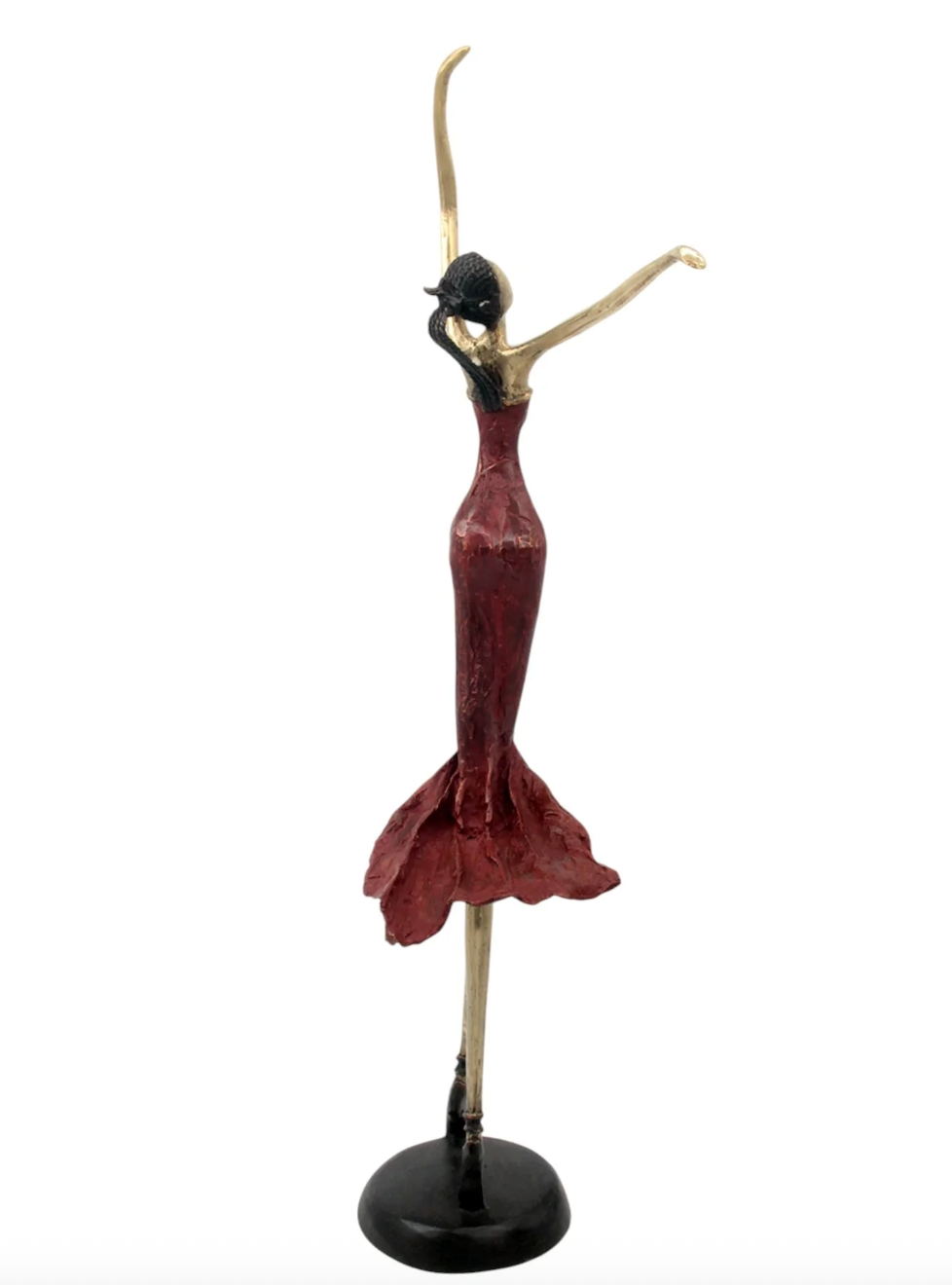
The Dancing Muse 17
$1,545.00
- Height
- Approx. 55 cm
- Weight
- Approx. 3 kg
- Material
- Solid bronze, lost-wax cast
- Finish
- Patina applied by hand
- Edition
- Unique piece
- Made in
- Ouagadougou, Burkina Faso
Delivery
- Shipped with UPS, tracked from the day it leaves
- To North America, Europe and Africa
- At your door in 8 to 15 business days
- Shipping calculated at checkout, duties may apply
Returns
- 14 days from delivery to change your mind
- Write to contact@umojastudio.fr and we guide you
Authenticity
- Made in the workshop of Issouf Bonkoungou, Ouagadougou
- A certificate of authenticity is available on request
Talk to an advisor
- Monday to Friday, 9 AM to 5 PM
- Or write to contact@umojastudio.fr
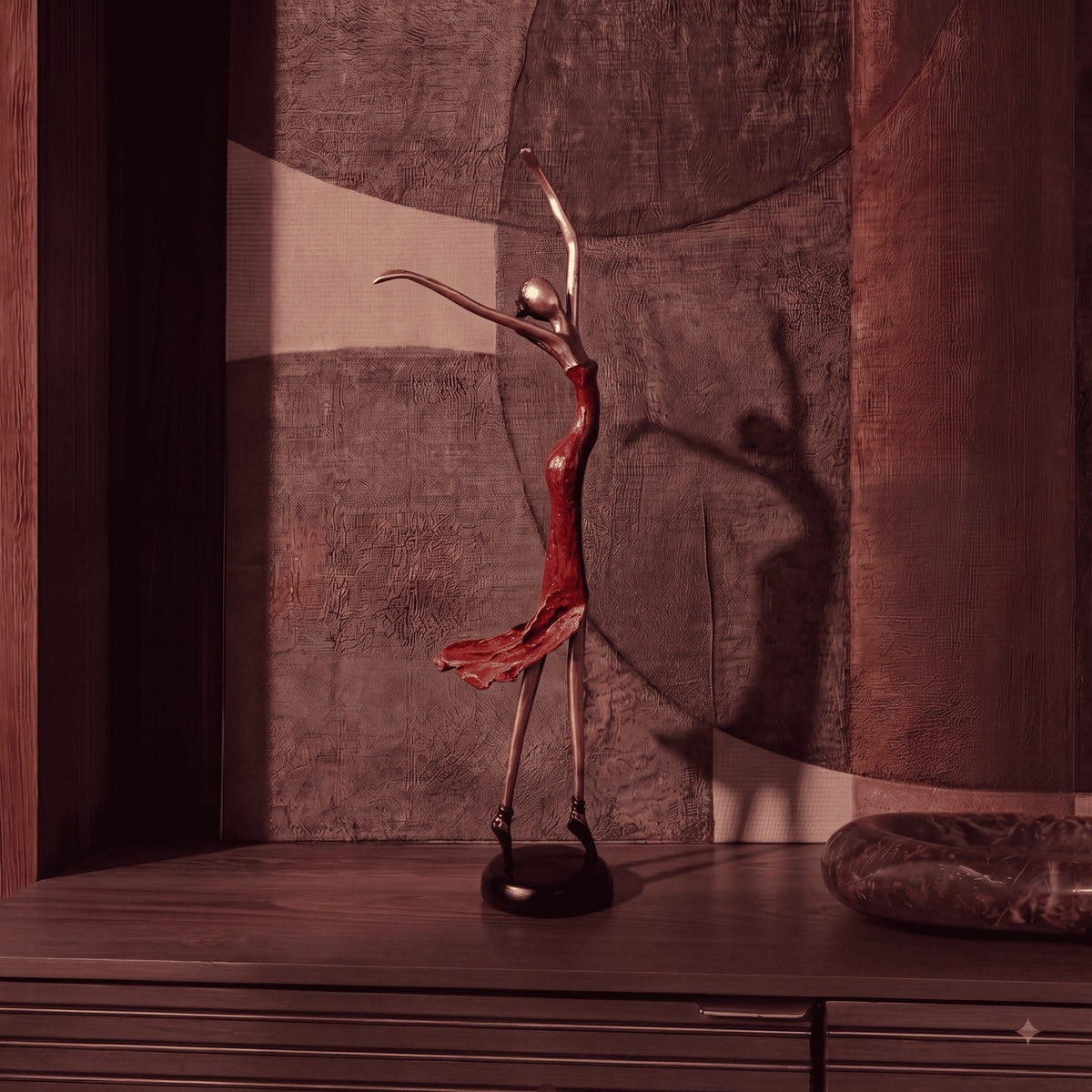
Burgundy
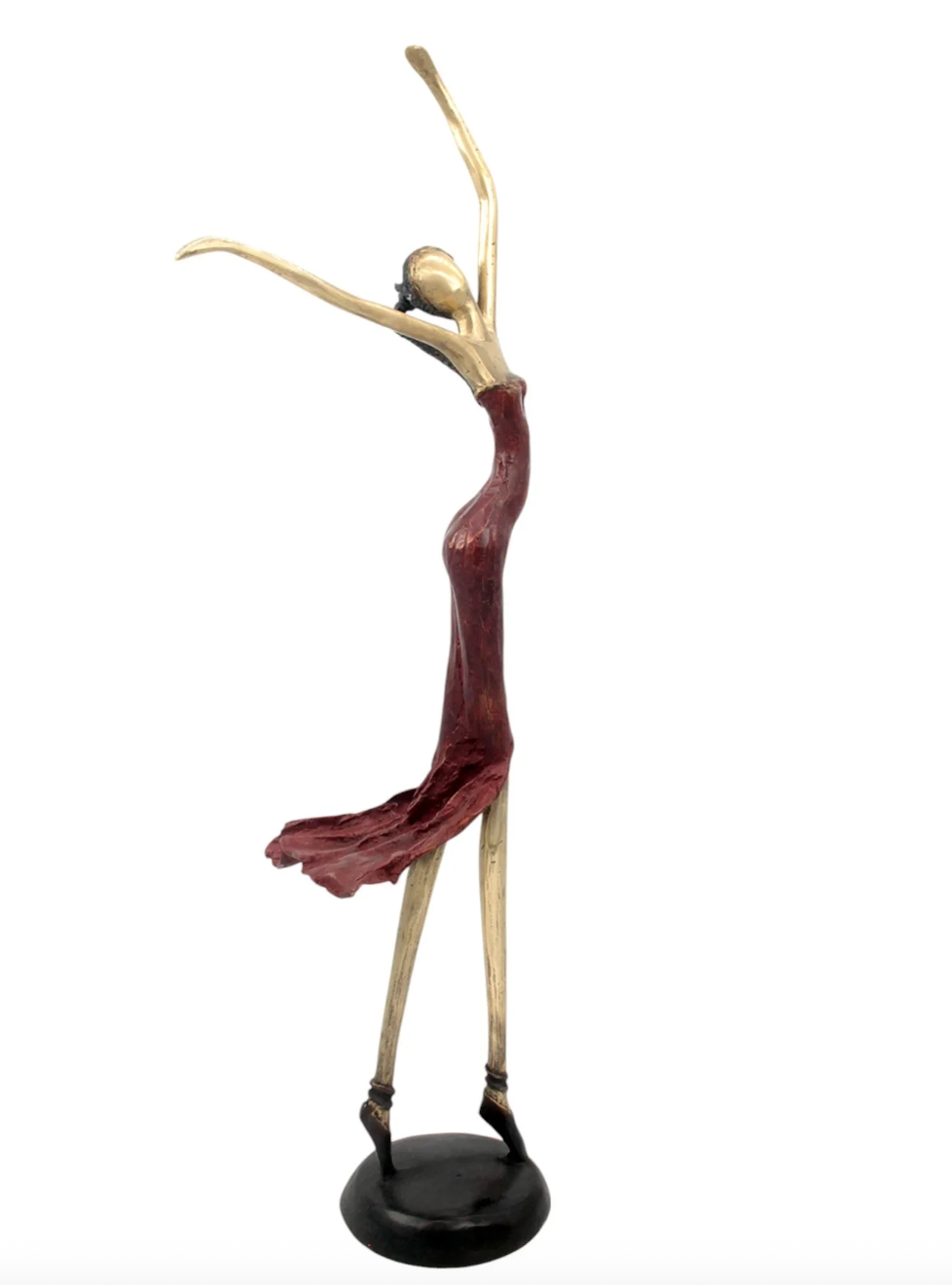
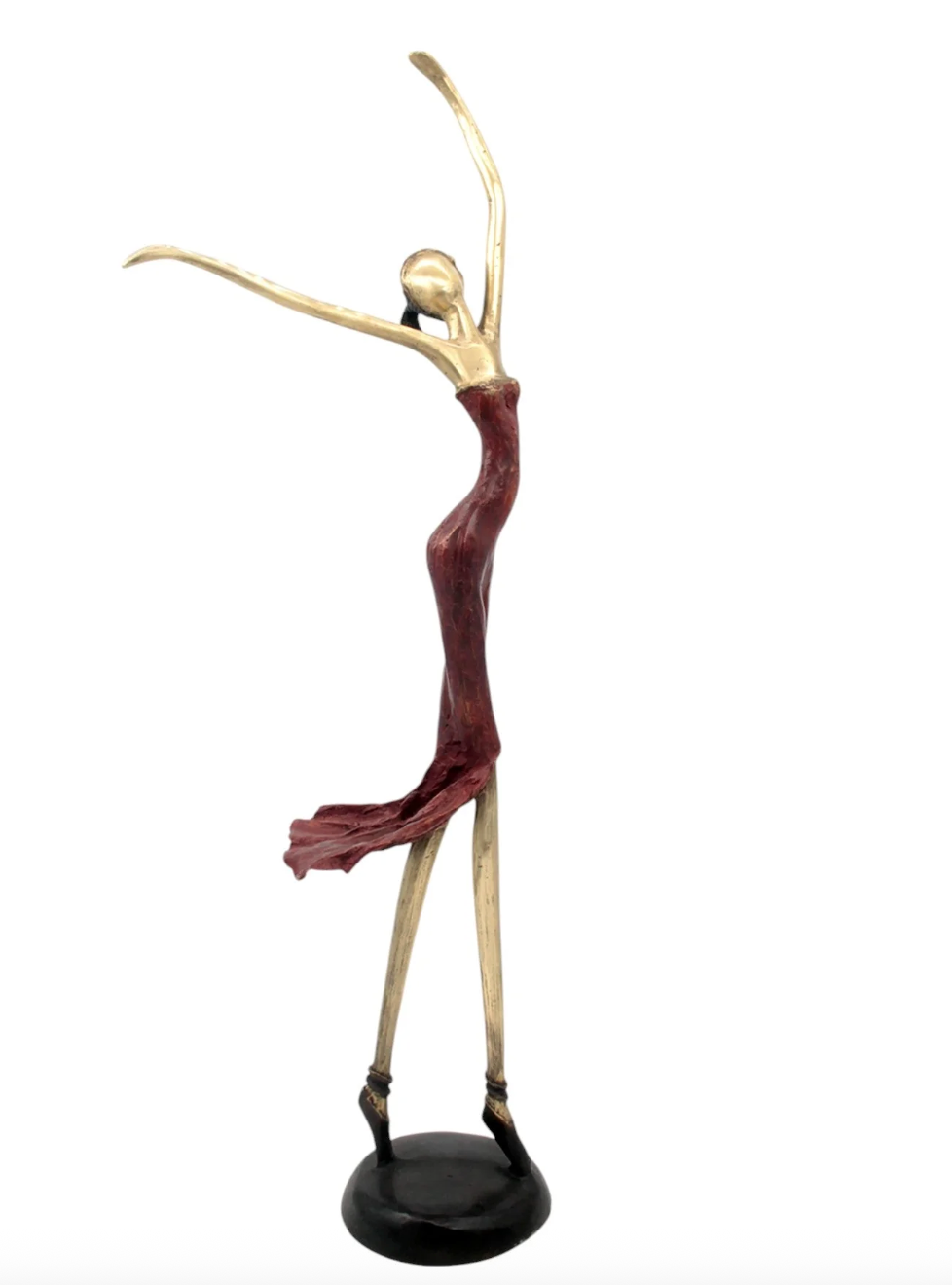
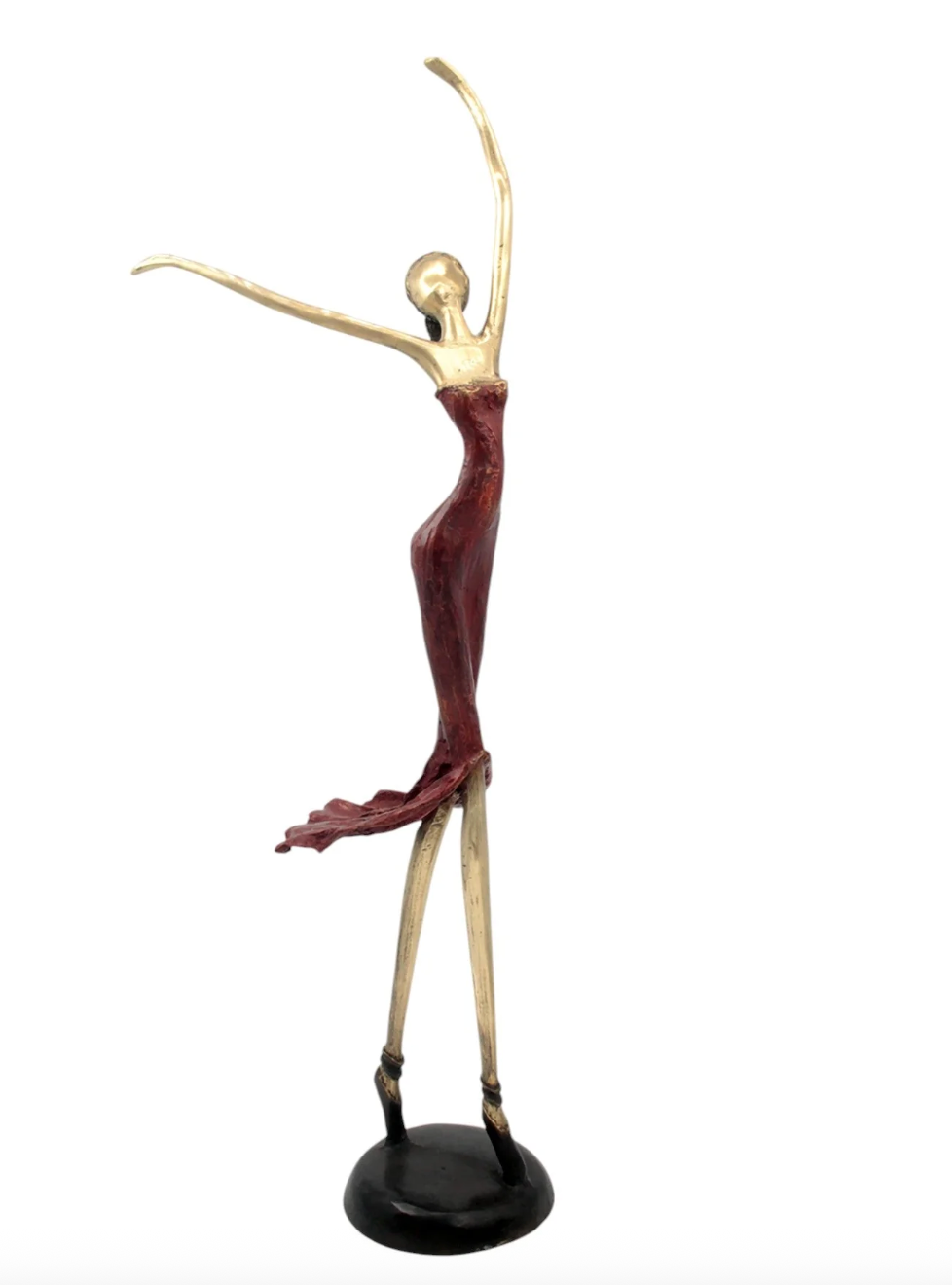
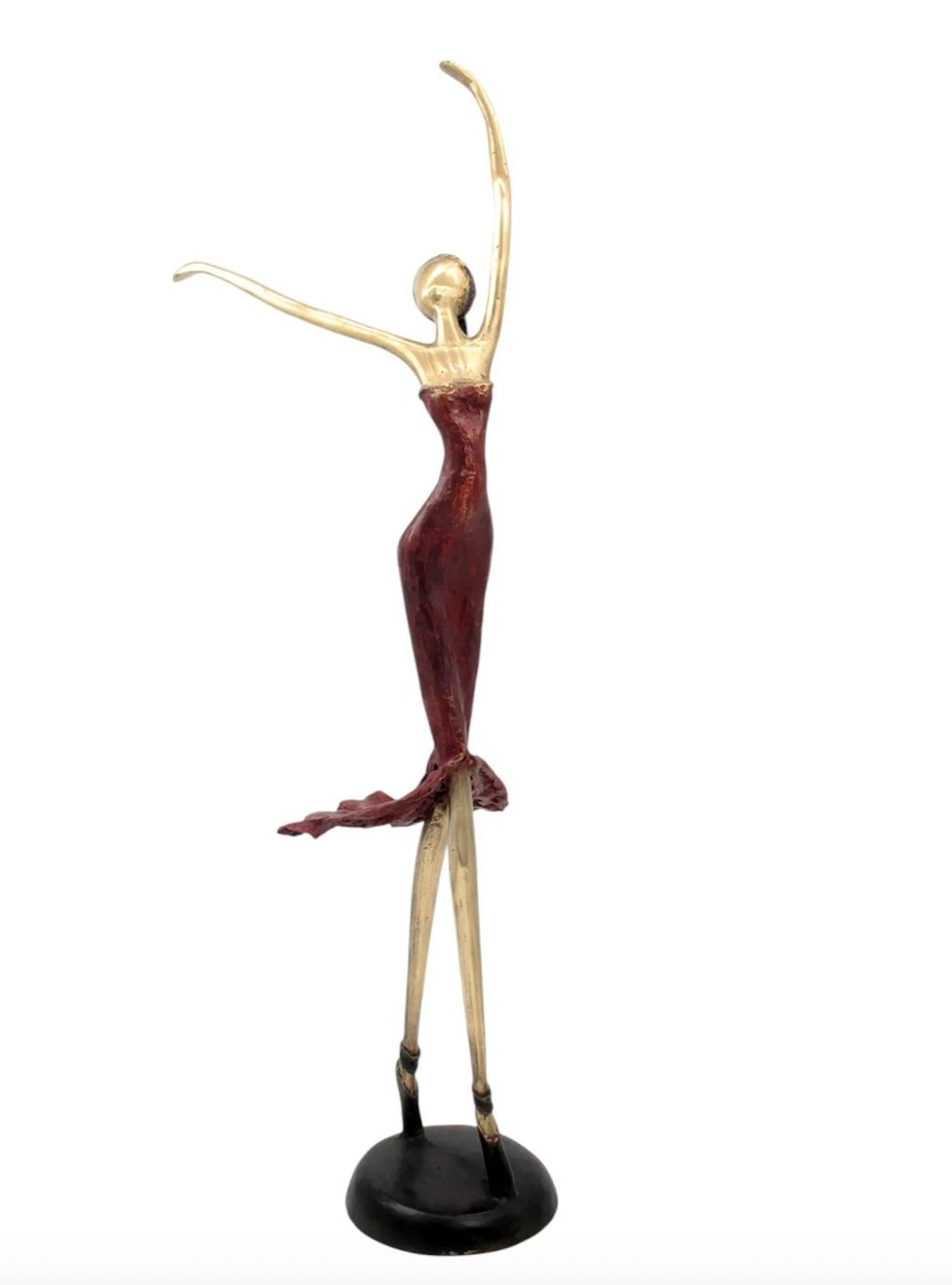
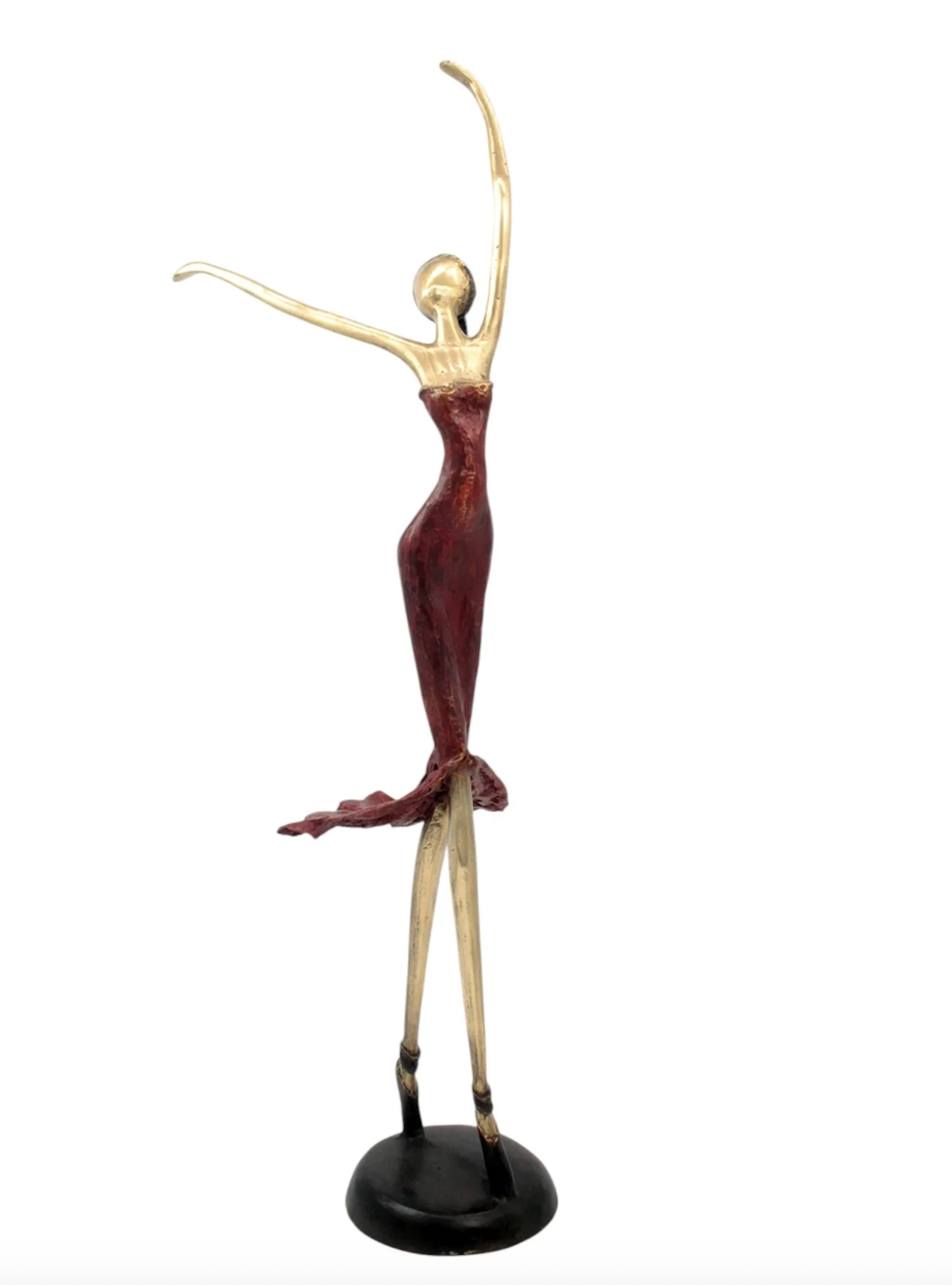
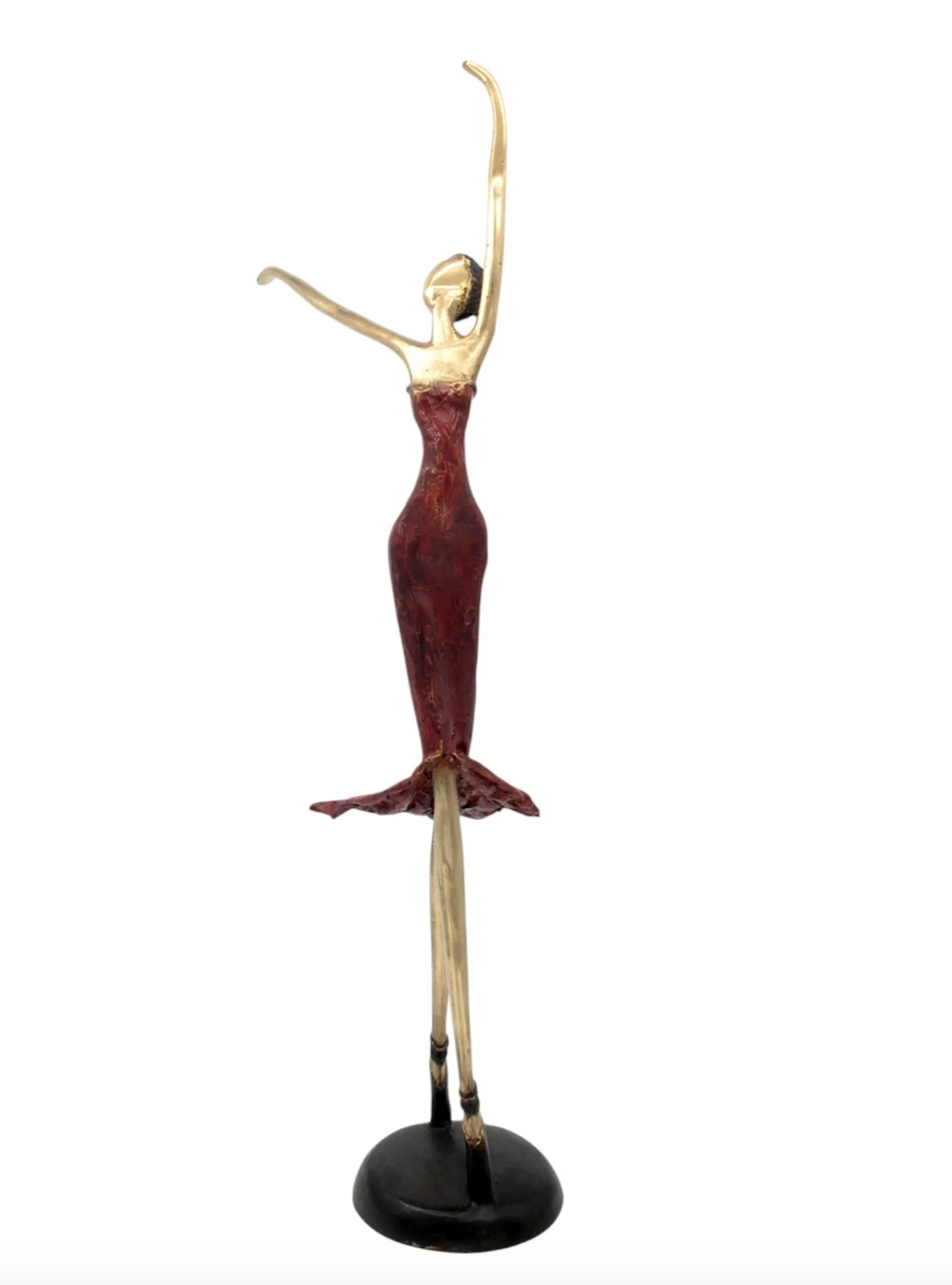
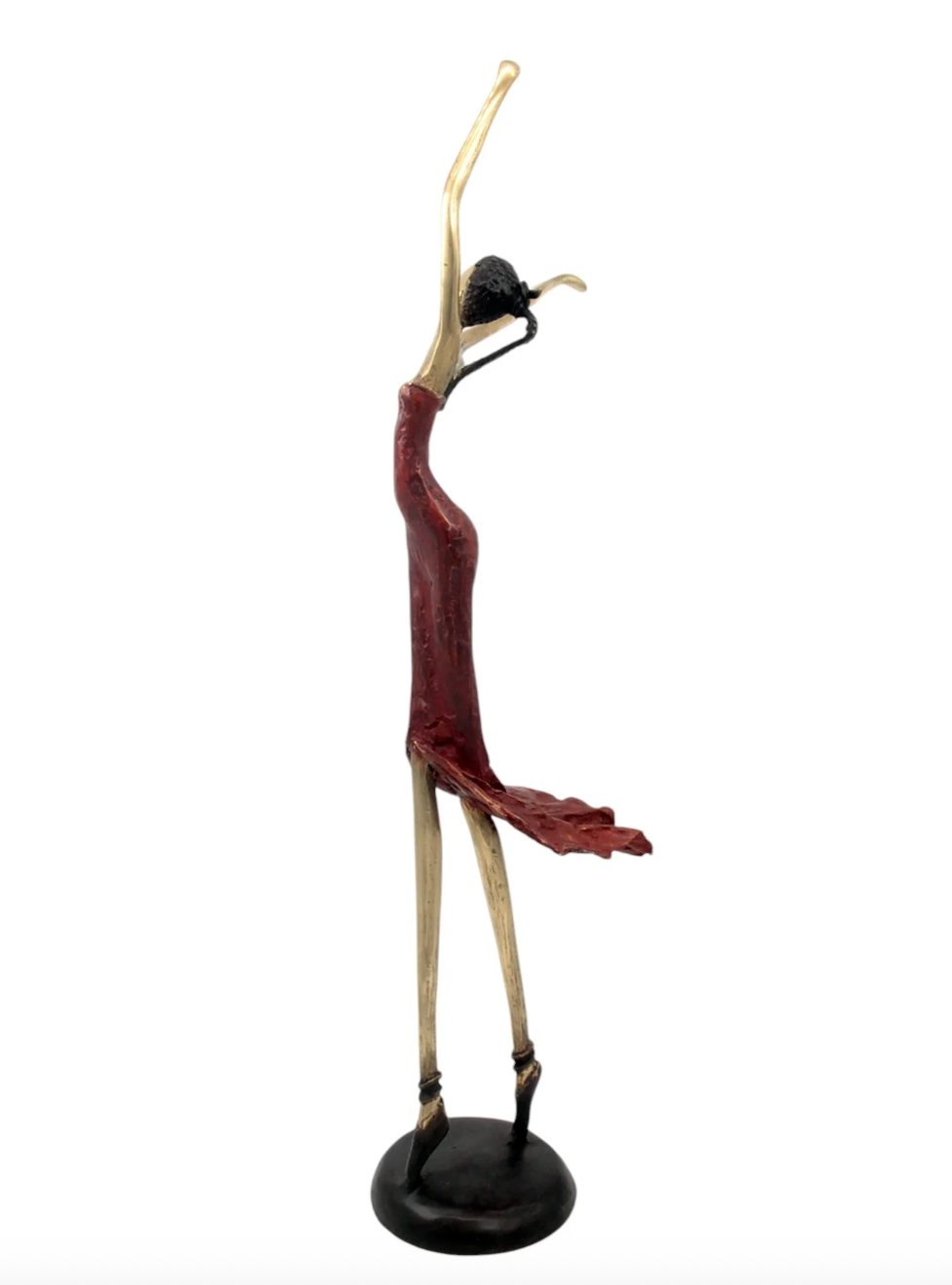
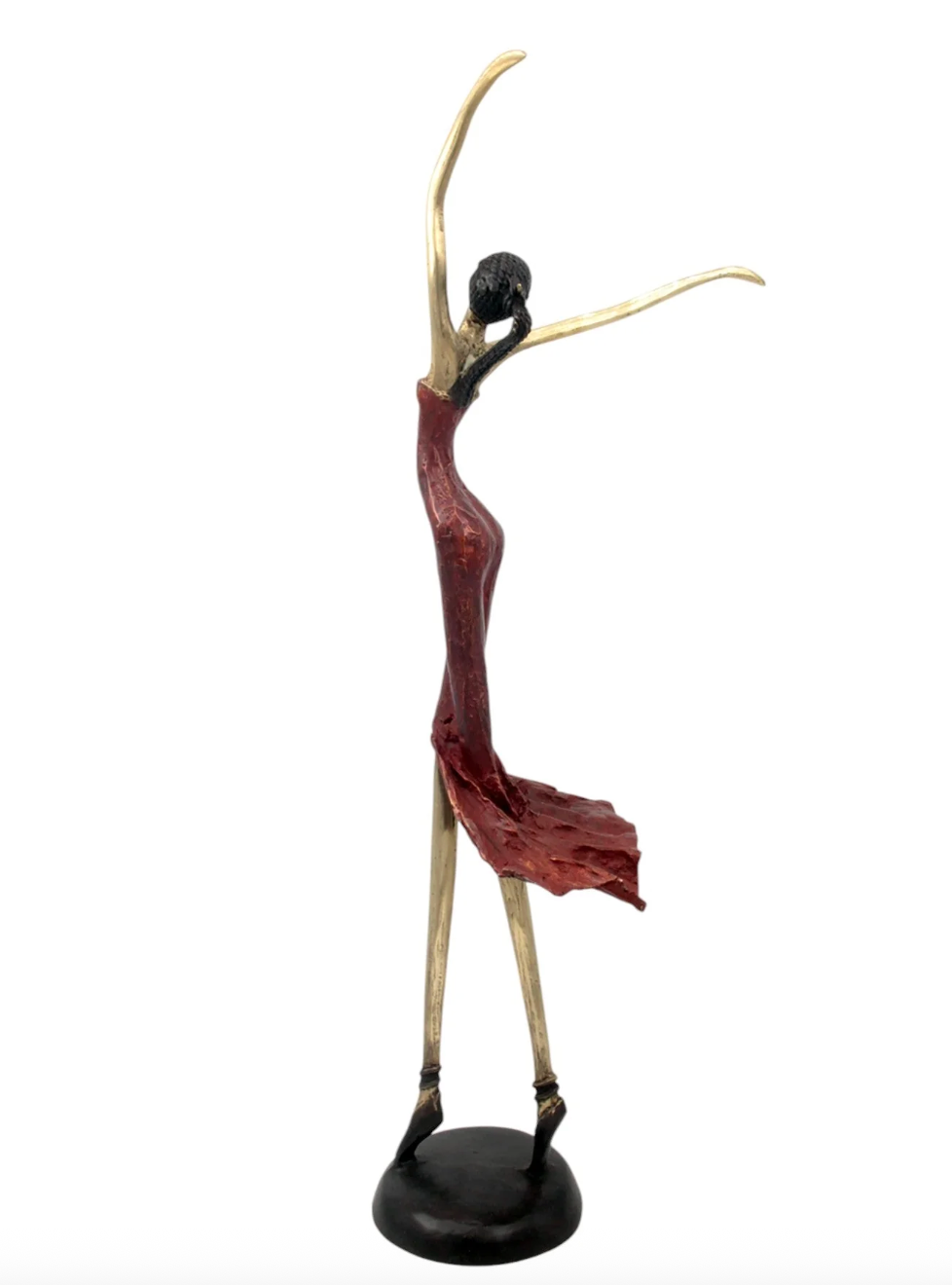
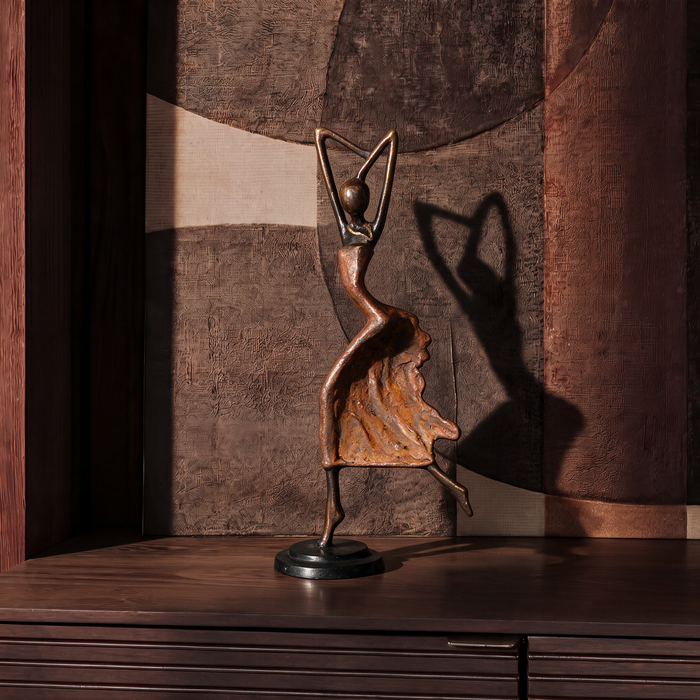
She dances as if the room were empty.
Some dances are not for anyone else: eyes half closed, arms open, the music only for her.
Her arms and body are polished to a pale gold, raised high and wide, while a burgundy dress wraps her waist and flies out at the hem. Her long legs end on a small black base.
Contrasted and elegant, she draws the eye from across a room. At around 55 centimetres, lost-wax cast, she exists in a single example.
How she was born
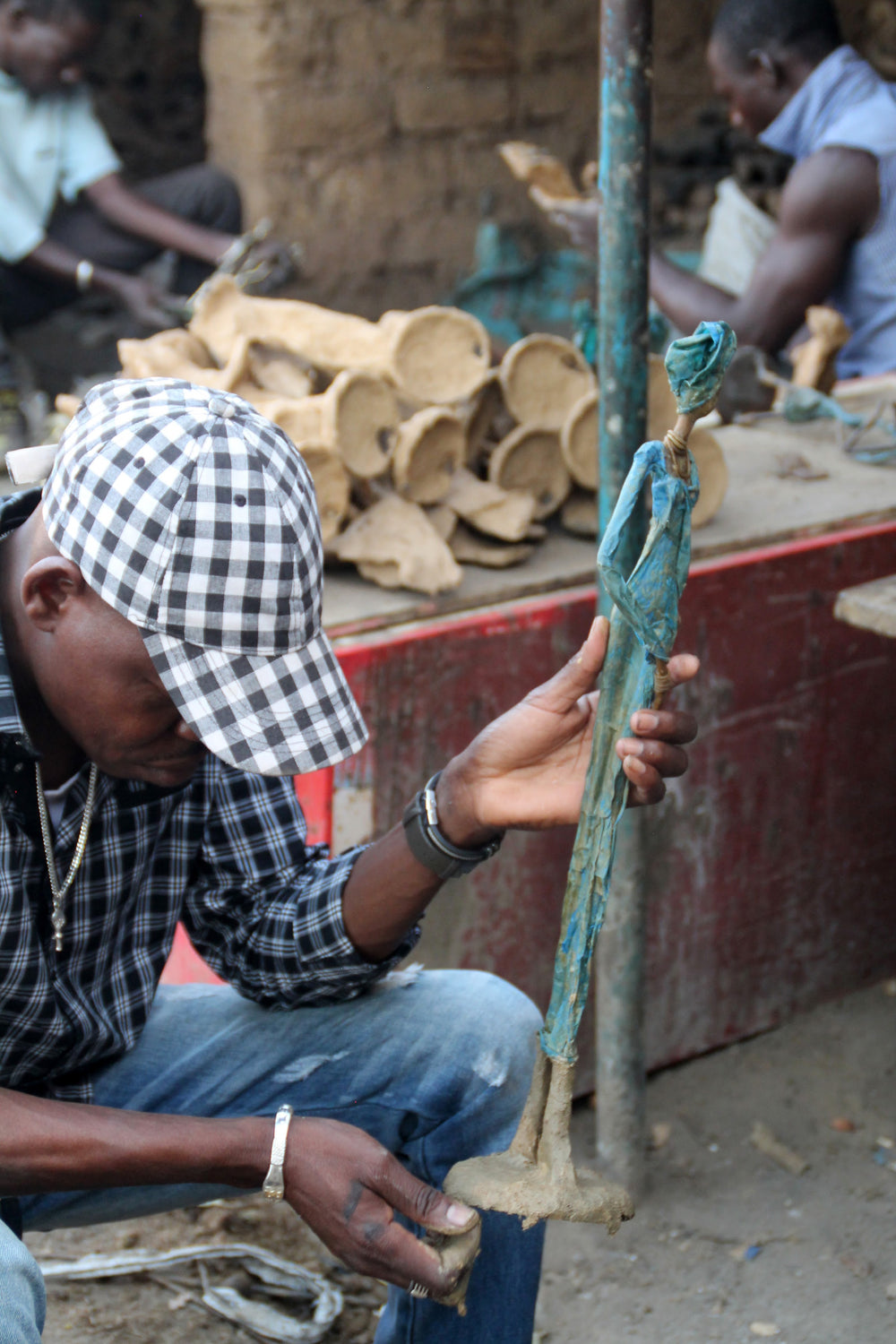
The workshop
In Ouagadougou, Burkina Faso, in the workshop of Issouf Bonkoungou: master artists and a team of artisans who cast every bronze by hand, using the lost-wax method.
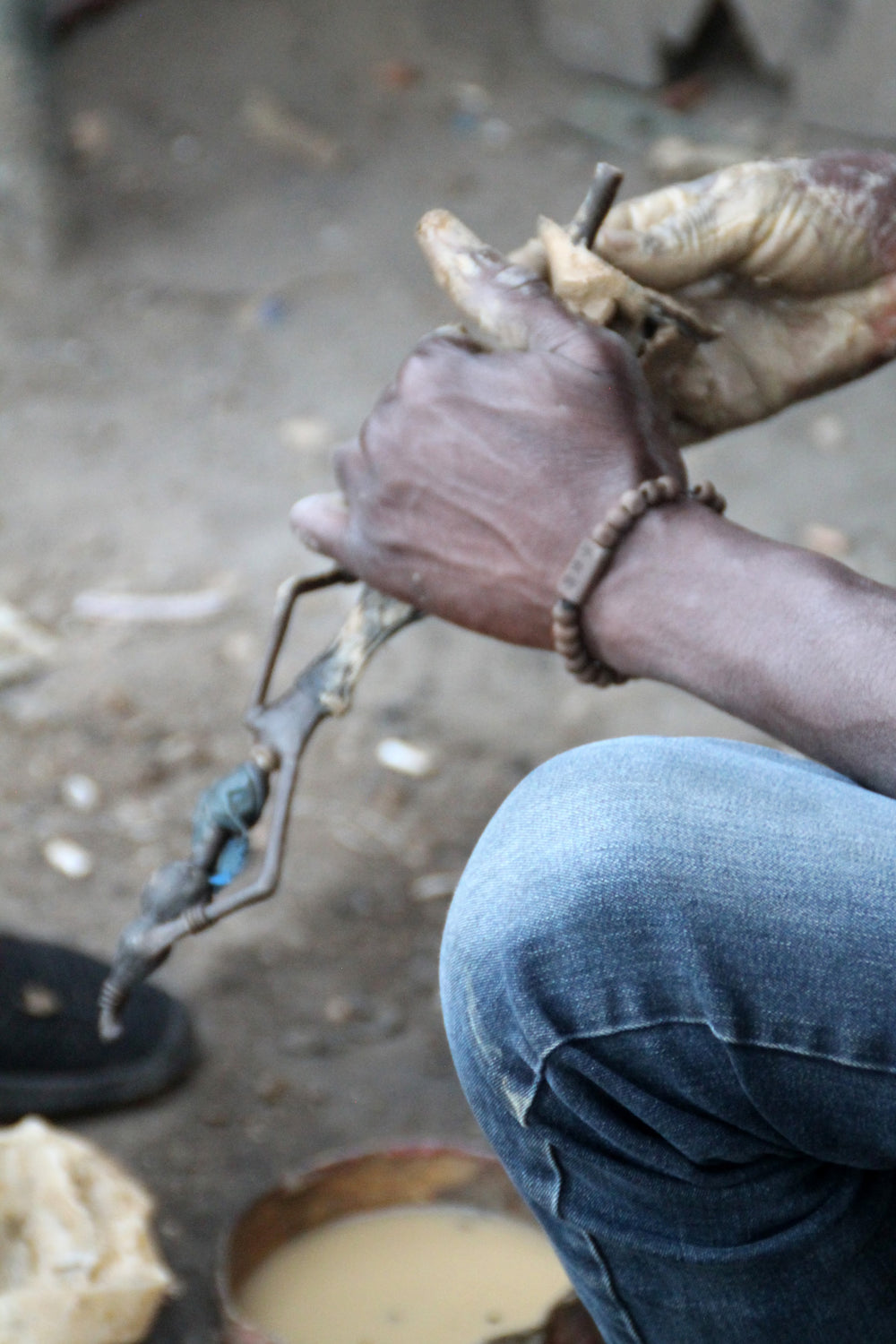
Shaped in beeswax
Every figure begins as a model shaped by hand in beeswax. The clothing is formed from melted plastic, which gives the drapes their movement.
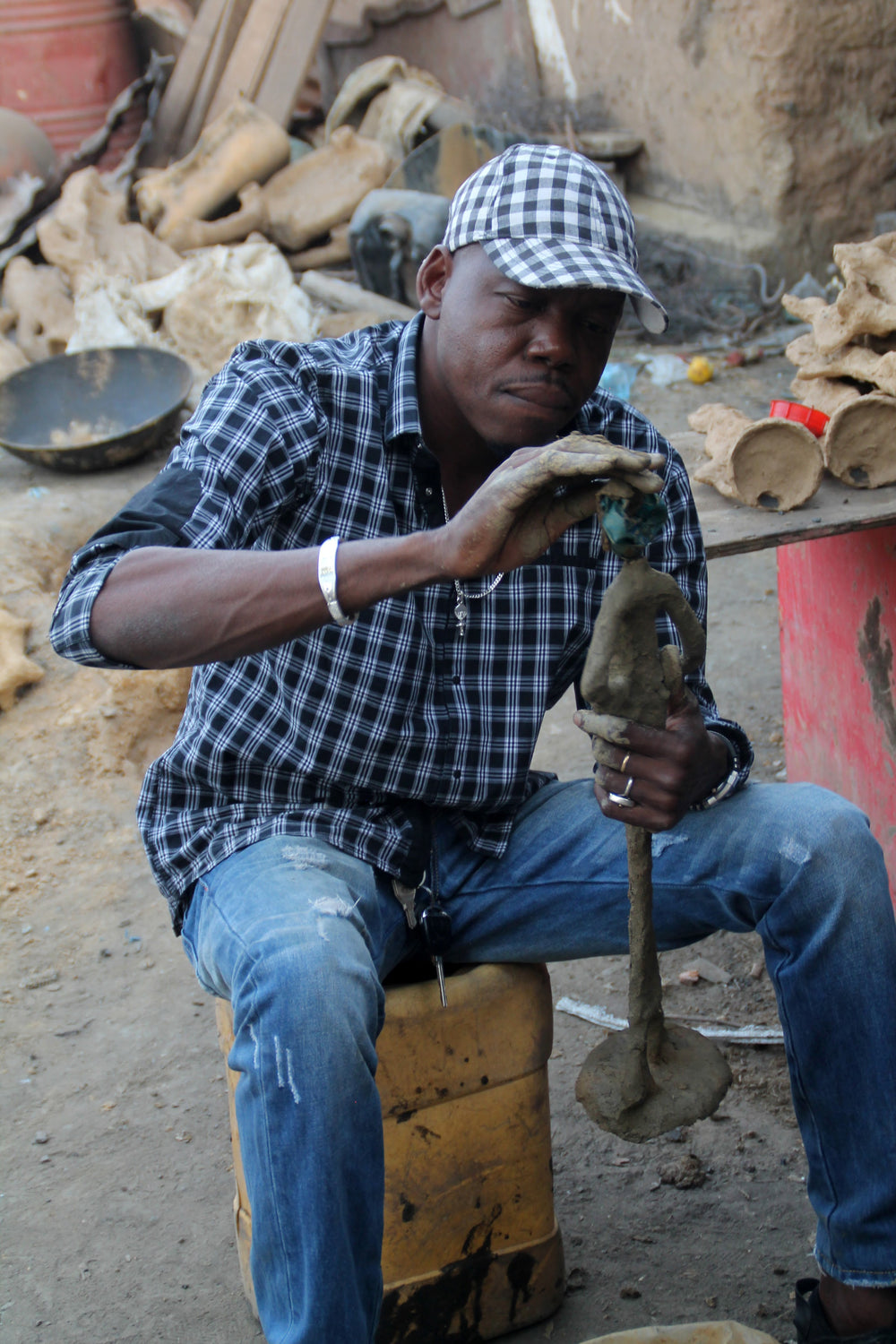
Wrapped in clay
Clay is mixed with donkey dung, kneaded and pounded, then laid over the wax in two coats: a fine first layer that takes every detail, then a second that holds the form. Small channels are left for the wax to run out and the air to escape.
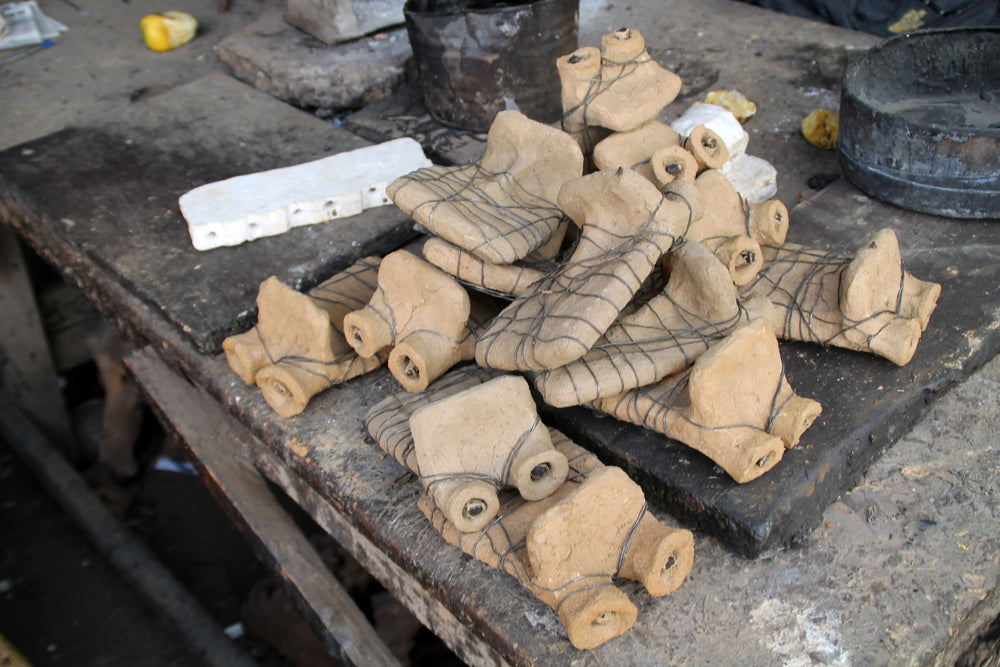
The moulds
Dried in the sun, the moulds wait side by side. Each one holds the shape of a single figure, and only one.
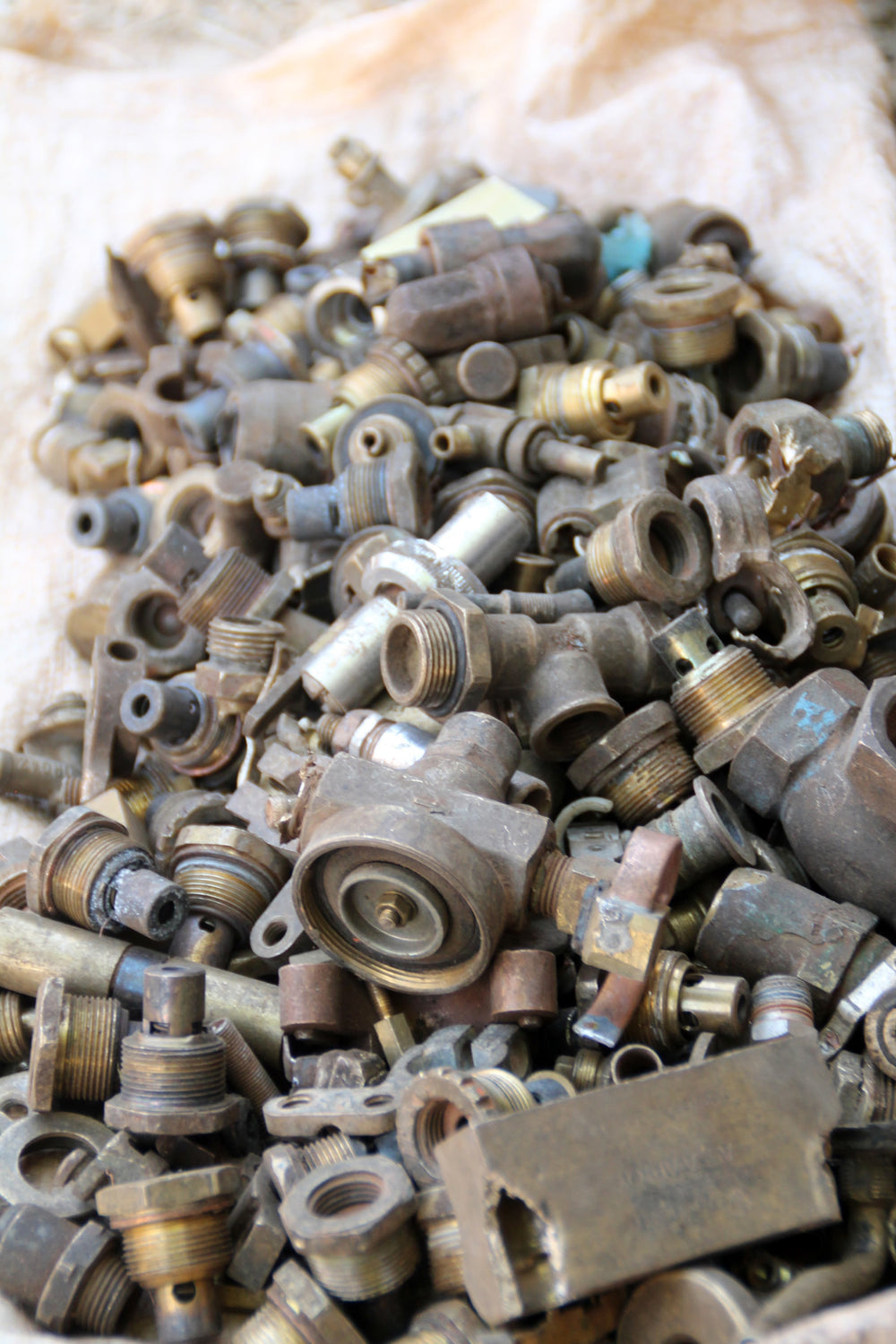
The metal
Old bronze and brass are collected, sorted and given a second life in the furnace.
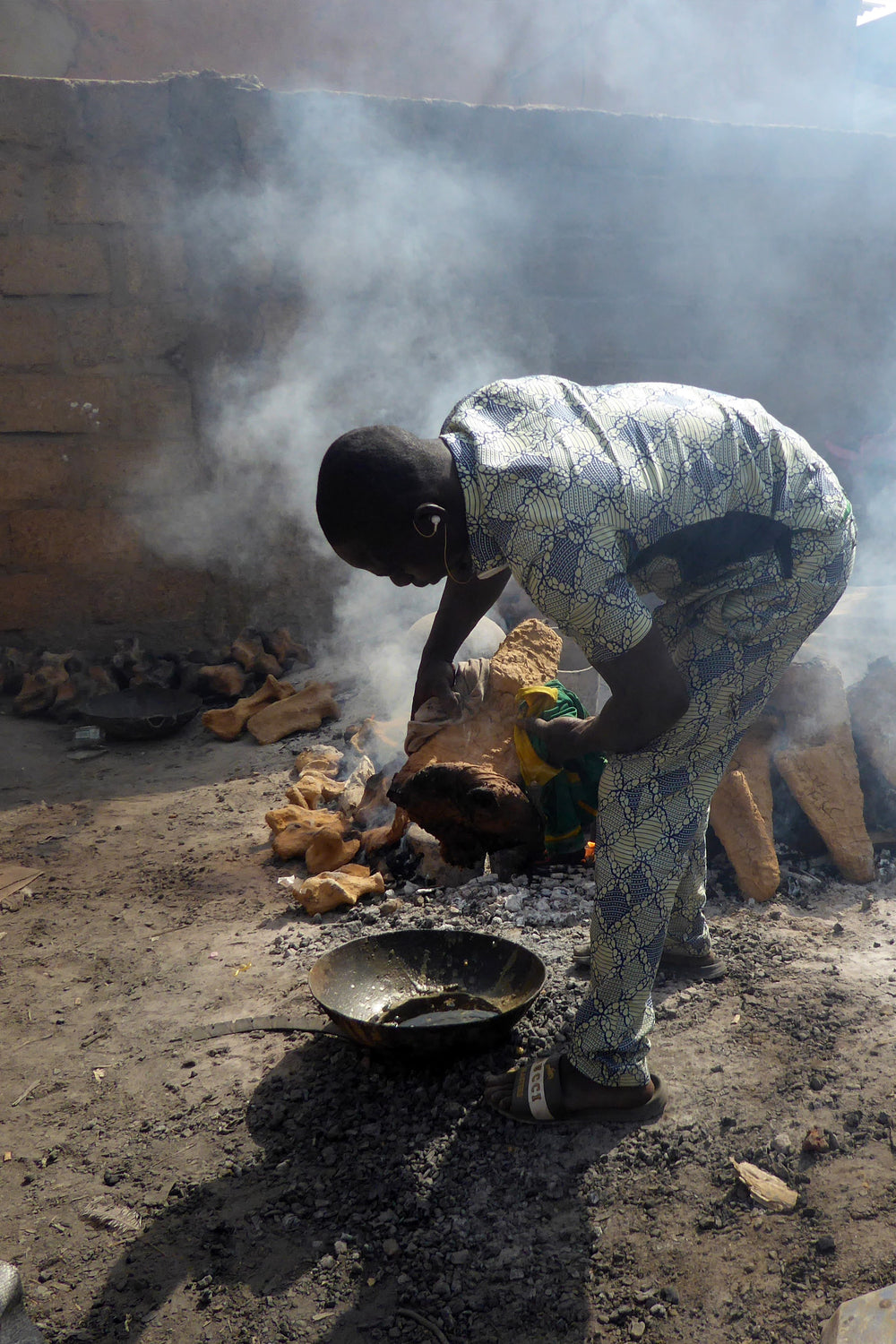
The wax is lost
The mould is heated. The wax melts and runs out, leaving the exact shape of the figure hollow inside the clay. This is where the technique gets its name.
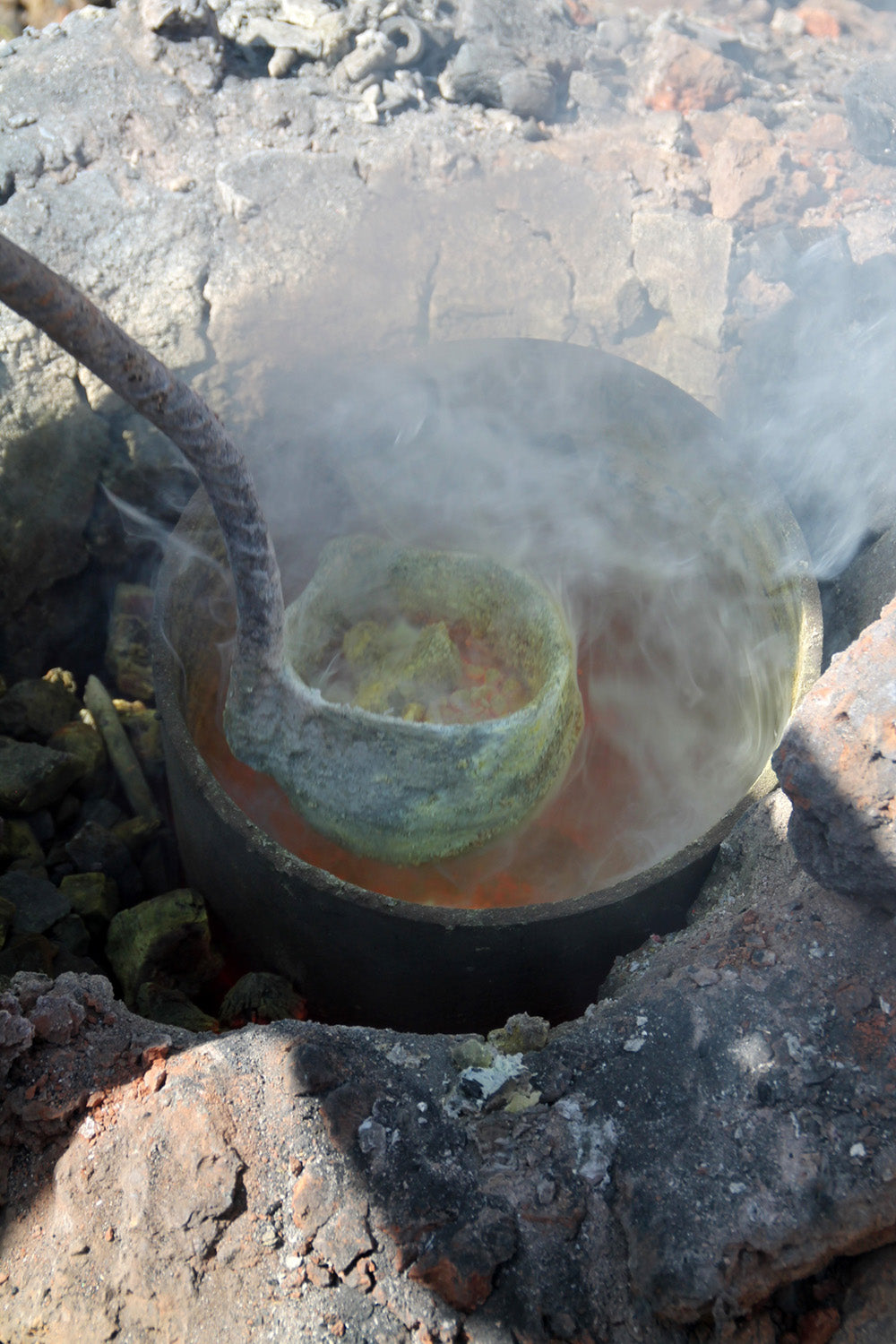
Molten bronze
In the furnace, the bronze is melted at 1,300 °C, until it glows like liquid gold.
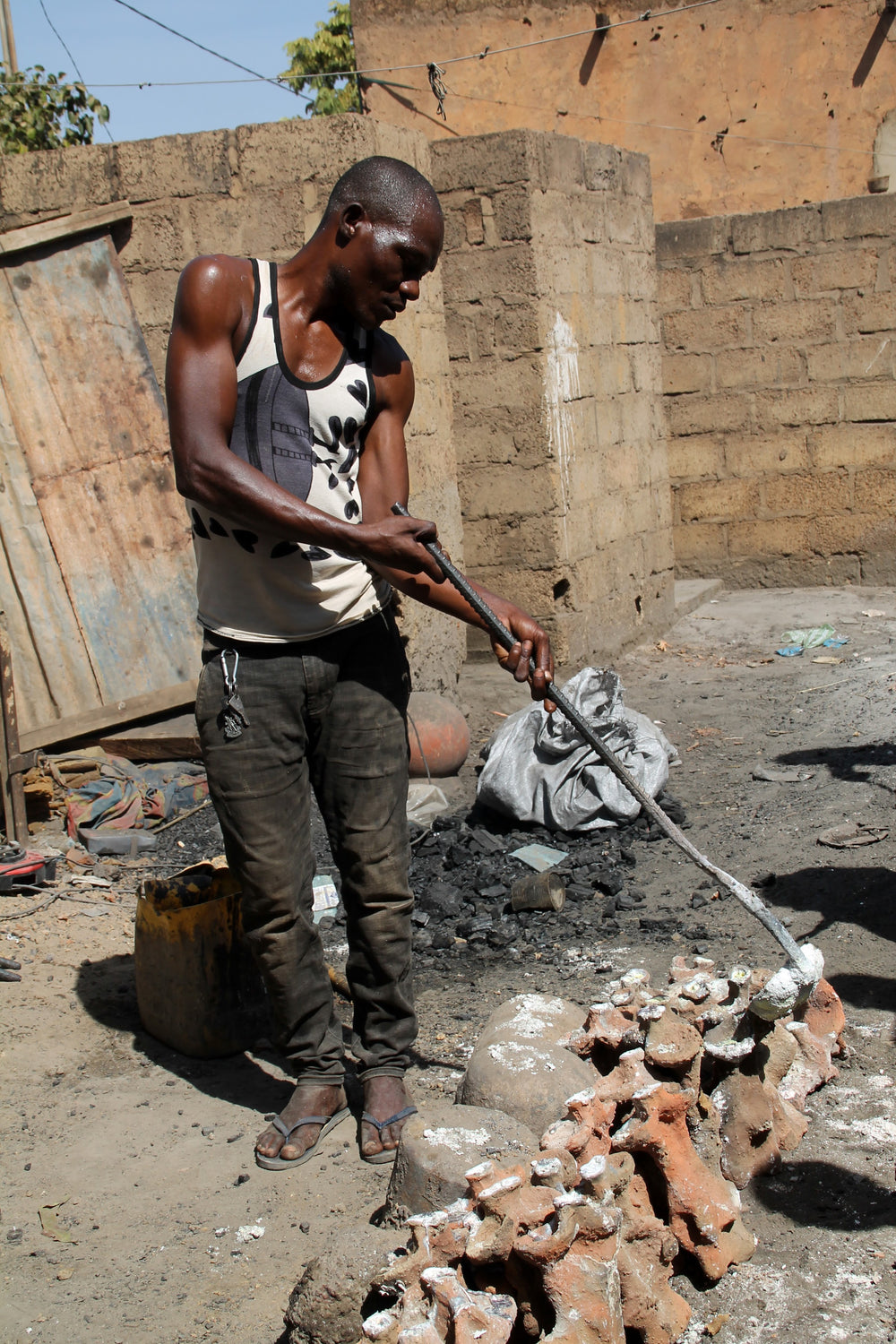
Poured
The artisans pour it into the empty moulds, in place of the lost wax, while the clay is still hot.
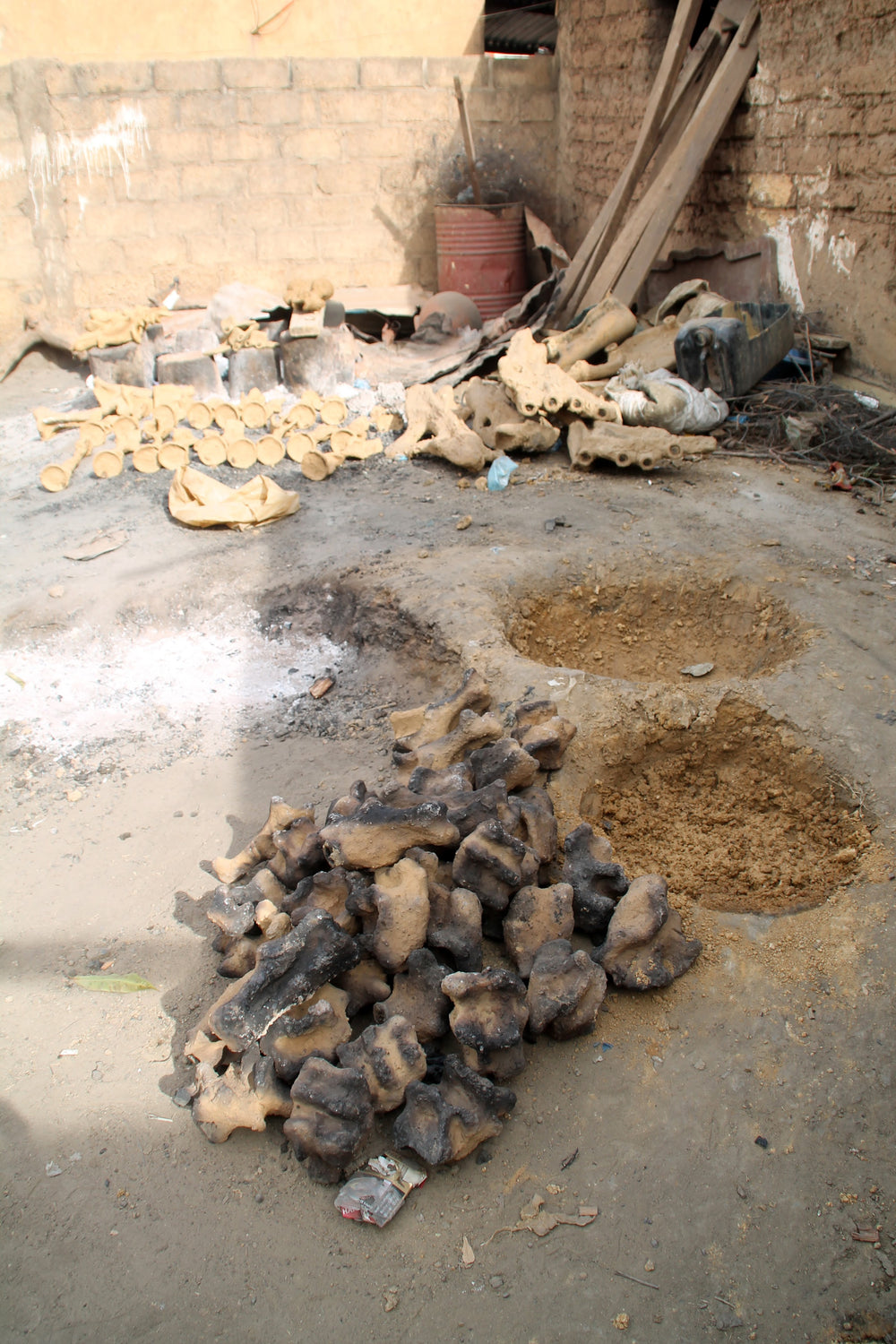
Broken free
Once cooled, each mould is broken by hand to free the raw bronze. It can never be used again, so no two castings are ever identical.
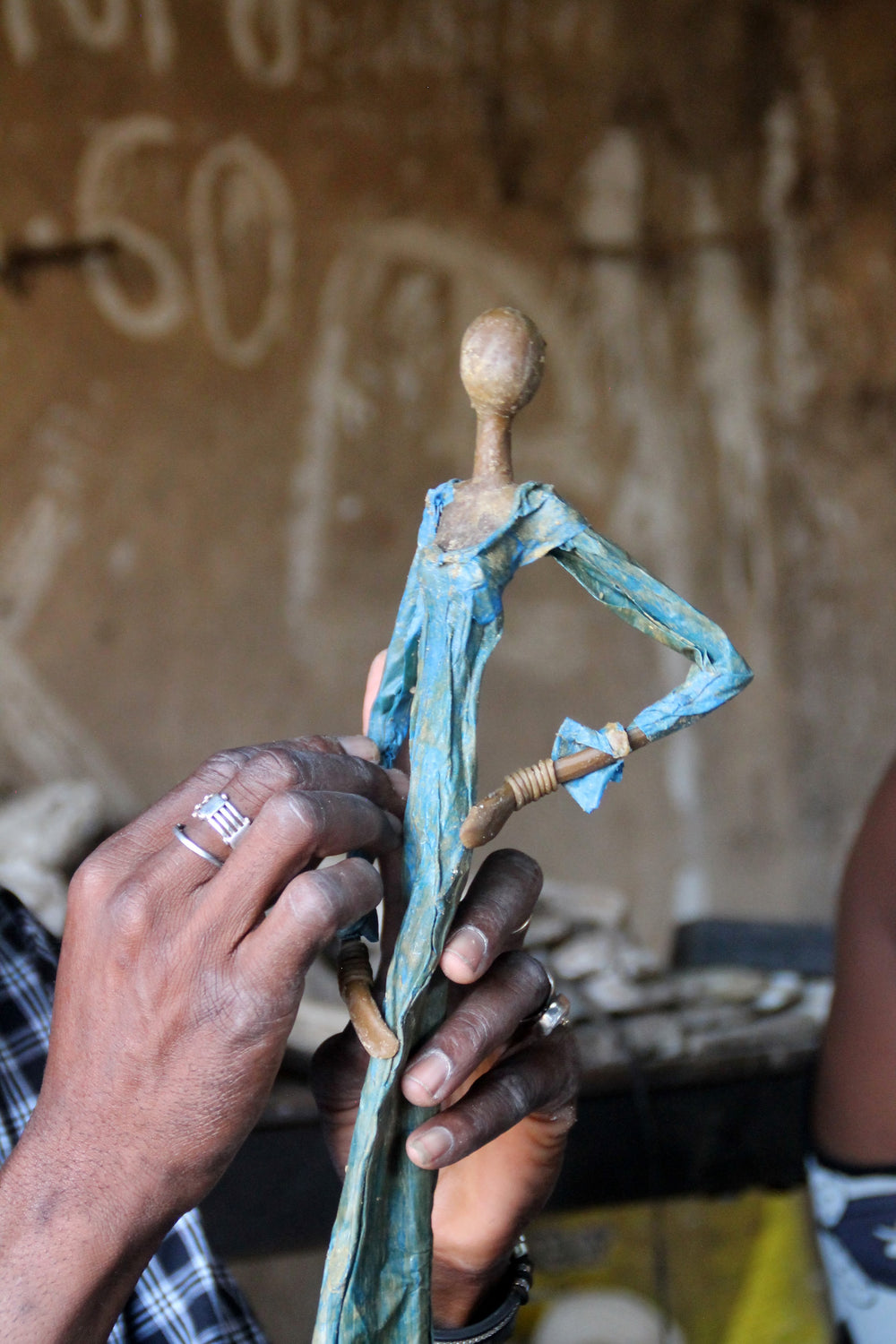
Filed and polished
The channels are cut away, then the surface is filed and polished until the bronze shines and the line of the body runs clean.
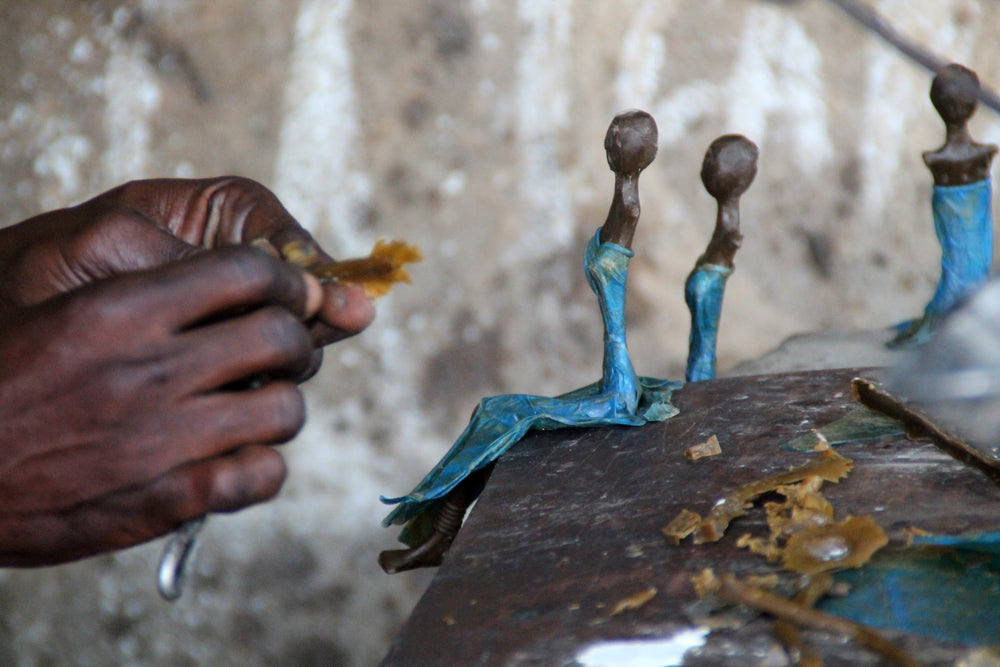
The patina
Colour is laid by hand: iron gives rust and brown tones, copper gives greens and turquoise, and tinted wax adds the blues and reds of the fabric.
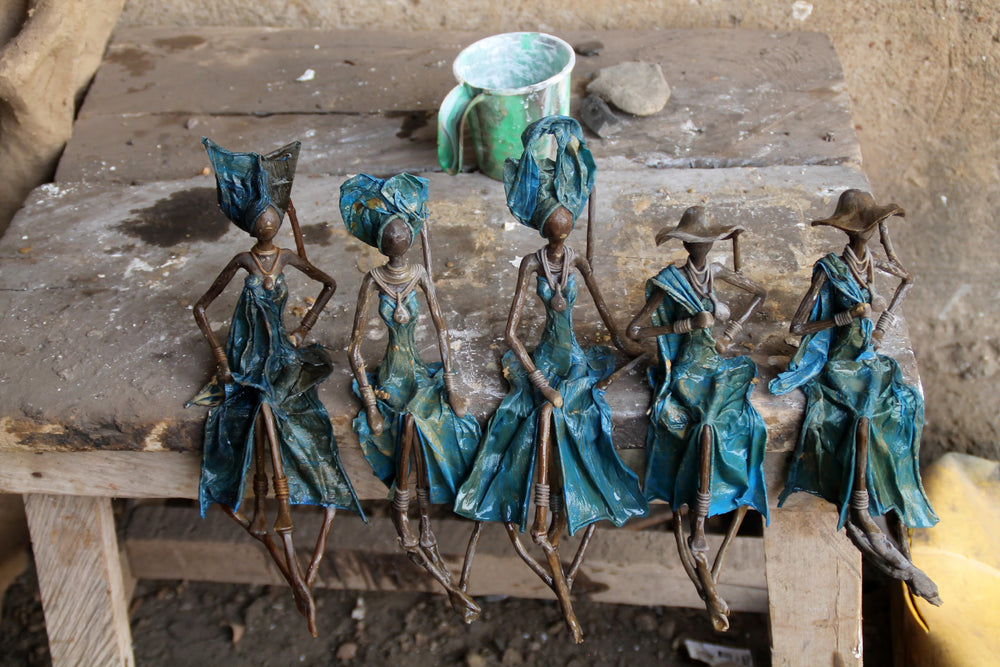
Ready to leave
Finished, the pieces stand in a row in the workshop, before leaving for the homes that will keep them.
From beeswax to bronze
See every step of the lost-wax process, filmed in the workshop of Issouf Bonkoungou in Ouagadougou.
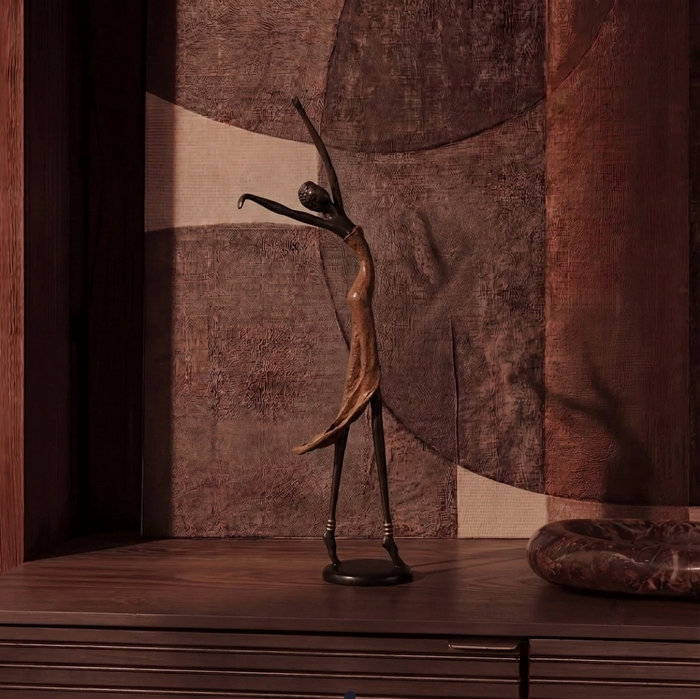
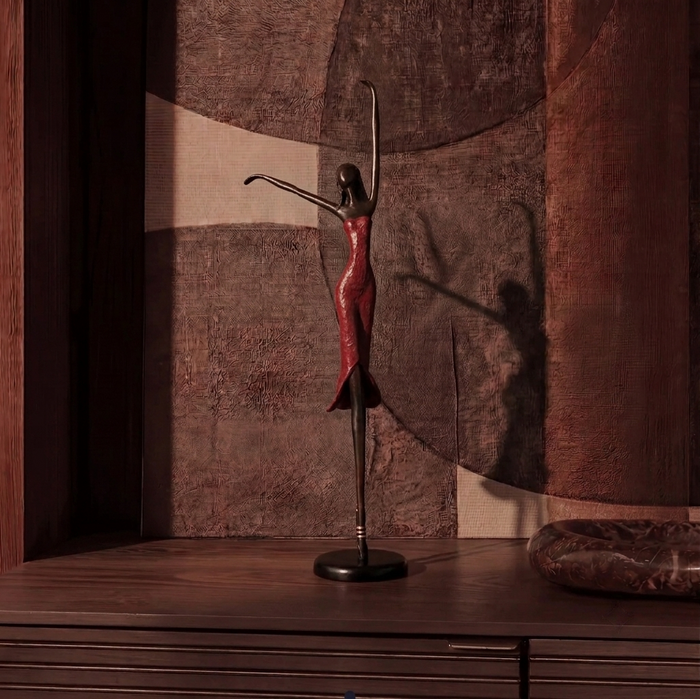
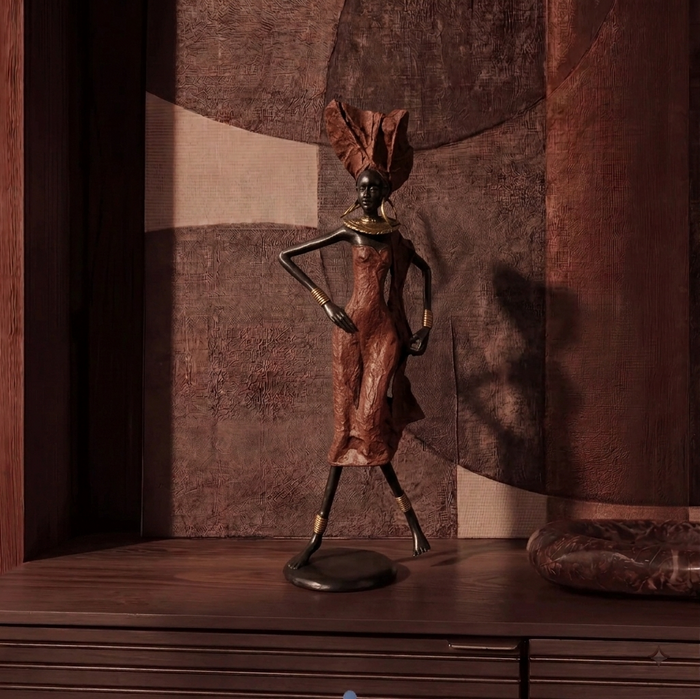
More Dancing Muses
FAQ
Why is every piece unique?
In lost-wax casting, the clay mould is broken to free the bronze, so it can only be used once. The patina is then applied by hand. No two pieces can ever be identical.
Is it solid bronze?
Yes. Every piece is cast in genuine bronze, then finished and patinated by hand. Small variations in texture and colour are the mark of hand work.
Where should I place it?
Indoors, on a stable, flat surface: a console, a shelf or a sideboard. A side light brings out the patina and draws its shadow on the wall.
How do I care for my bronze?
Dust it with a soft, dry cloth. Avoid water, chemical cleaners and abrasive materials, which can damage the patina, and long hours of direct sunlight. Over time, the patina may evolve naturally and gain character.